
Government, local authorities and regulators
Central government, local authorities, NHS trusts, police and fire authorities set the rules, find the money and commission the work, then live with the result for decades. Most of the leverage a public client has sits before anything is signed.

The decisions that matter most
A public client's hardest decisions are usually made before any contractor, adviser or provider is in place to share them.
Where problems tend to arise
When a procurement disappoints, the procedure usually takes the blame. The cause more often sits upstream, in how clearly the authority defined what it needed before going to market. The same pattern shows at consent and at contract expiry: the outcome is largely settled by questions left open at the start.
Three moments that matter
- Before you go to market. The Procurement Act 2023 lets an authority use a competitive flexible procedure of its own design, so the route to market can follow the outcomes, risks and delivery strategy, provided those are clear first.
- Before you seek consent. The front end of the DCO regime changed on 24 July 2026, and the consultation record is now a judgement an applicant may have to defend at examination.
- Before a PFI contract ends. Government guidance recommends starting at least seven years before expiry, and options tend to narrow to what the contract already says by two years out.
How we help
We help authorities settle the early questions and keep the reasoning with the organisation.
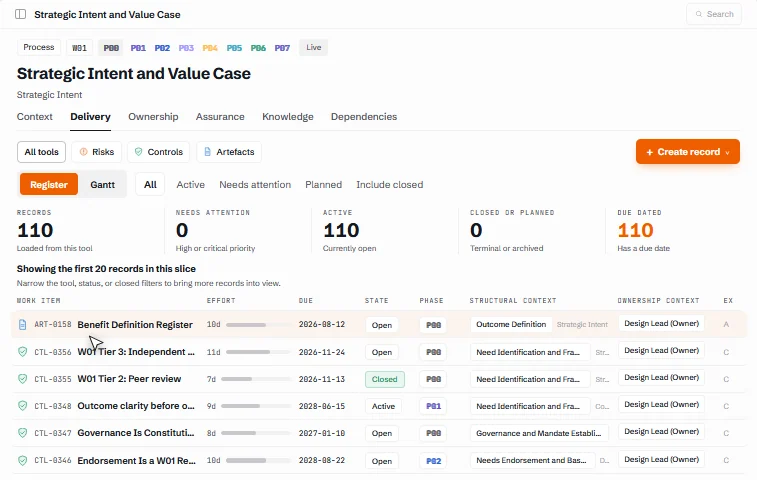
Much of this work is independent strategic and operational advisory: working with officers and their advisers on procurement strategy, the risk position and what to require of a provider. Where the question depends on how an asset or programme behaves, we build models of it. Where an authority wants its governance to be traceable, Project:OS can hold the roles, duties and gates.
Worked examples and insights
Questions
Can you help us design a procurement under the Procurement Act 2023?
Yes, on the strategy that comes before it. The Act lets an authority use a competitive flexible procedure it considers appropriate, requires it to consider dividing a contract into lots, and asks it to have regard to the barriers smaller suppliers face. That freedom helps only if the authority is clear on the outcomes that matter, which risks to keep and how the market can respond. That is where we start.
Our PFI contract expires in the 2030s. When should we start?
Earlier than most authorities do. The IPA's guidance recommends starting at least seven years before expiry, with expiry initiation between seven and five years out. Much of the leverage sits early, while the provider still has years of payments to protect. We can build a first picture of the asset from published records before you ask the provider for anything, so your first requests are the right ones.
How do we stay an intelligent client when we rely on large advisers?
Keep apart the roles that need to disagree: the adviser who shapes the scheme, the partner who delivers it and the reviewer who tests it, checking ownership at group level. Name and evaluate the people who will do the work. And keep enough capability in-house to question, and if necessary reject, the advice you are buying.
Do we have to replace the systems we already use?
No. Process work can run in Project:OS or in the systems you already use, and either way each step is linked to the evidence it should produce so you can see it is followed. Where information needs connecting, we work with what is already in place.
Talk to us
Whether it is a procurement, a consent or a contract approaching expiry, that is a good place to start.
Start a conversation