
See where time and money go between the factory and the site
Production work is usually planned as a list of activities, but it behaves like a flow, and wherever one stage waits on another, time and money build up. We work with specialist and trade contractors, manufacturers and suppliers, and the clients who depend on them, to understand how work moves from design release to installation, where it waits and which changes would make the most difference.
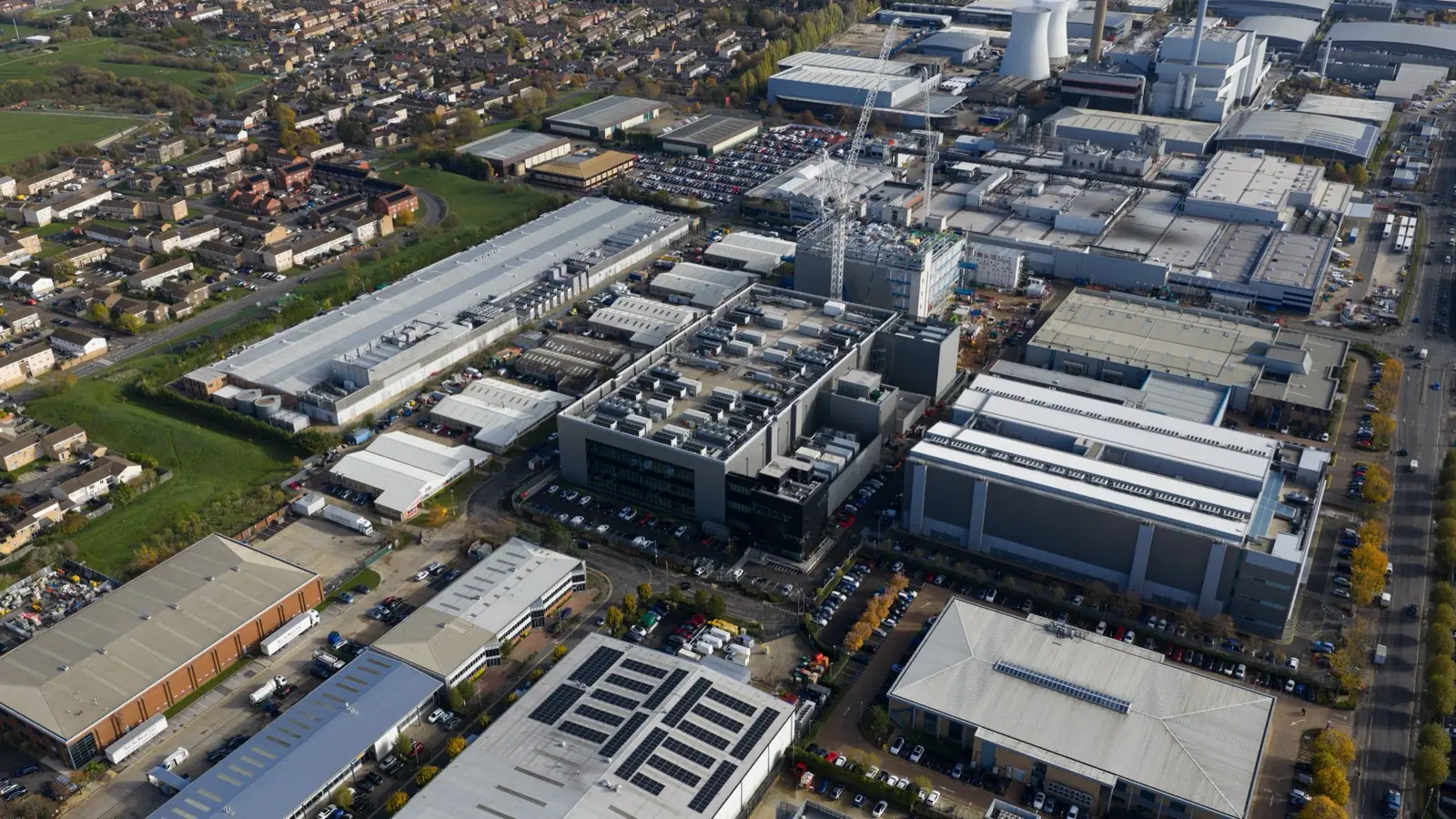
Work is planned as activities but behaves as a flow
The cost of waiting rarely appears in any single plan, because it sits in the gaps between stages that are owned by different people.
A building component may be designed by one organisation, made by another, moved by a third and installed by a fourth. Each plans its own part well. The time lost is in the gaps: drawings released late, a factory slot missed, a delivery that arrives before the site is ready, a crane waiting on a pour.
Because each party sees only its own stage, the pace of the whole chain is often set by a constraint that no one has named. Effort then goes into speeding up stages that were never holding the programme back, and the date does not move.
Why it is difficult
Throughput depends on how the stages combine, and that is hard to see from inside any one of them.
How we approach it
We work with the people who run each stage, drawing on Lean and Six Sigma practice and on models that can be rerun whenever the inputs change.
- Map the flowFollow the work from design release and manufacture through logistics to installation, with the time spent working set against the time spent waiting.
- Name the constraintIdentify the stage that sets the pace, so effort goes where it moves the date.
- Model the optionsBuild a model at the level of detail the decision needs, with each rate and assumption visible and replaceable.
- Test before committingCompare methods, shift patterns, plant and materials on cost, time, carbon and cash, and show where the model is uncertain.
- Put the change into practiceSupport the change on site or in the factory, measure what happens and update the model as evidence comes in.
What the work involves
Some engagements need all four of these, whilst others start with a single package, factory line or delivery route.
The models are kept as working tools, so they can be rerun as rates, volumes or methods change. Historical data helps calibrate them where it exists. Where records are thin, each rate and assumption is shown and can be replaced as better figures come in.
What a contractor or manufacturer gets from it
What a contractor, manufacturer or client can expect to know at the end, and the decisions that follow from it.
Worked examples
Three models show the approach, and each of them states where its figures come from.
Illustrative model
Concrete frames, optimised
Why wait for rounds of pricing to find the best way to build a frame? The analyser compares the options while the decision is still open and shows which combination best meets the objective that matters most: cost, programme, carbon or cash.
It tests 972 combinations of slab system, core method, concrete mix, shift pattern, cranes, gang loading and falsework, and reports cost, time, carbon and cash for each. It uses generic rates, and every rate can be overwritten with a contractor's own to calibrate it against a real estimate.
Illustrative model
A frame contractor's function model
Seven stages, from pricing the work to learning from the outturn, built from first principles and public standards. It shows how a specialist frame contractor turns an order into finished work, with the controls at each step.
Illustrative model
SMR, from concept to completion
A small modular reactor build traced from design release to first power, through long-lead forgings, the module factory, module logistics, installation and commissioning. The figures are illustrative placeholders and make no claim about any real programme. With those figures, the constraint moves from long-lead forgings on the first unit to the module factory once the build is in series.
First unit
- Design release
- Long-lead forgings
- Module factory
- Logistics
- Installation
- Commissioning
Long-lead forgings set the pace
In series
- Design release
- Long-lead forgings
- Module factory
- Logistics
- Installation
- Commissioning
The module factory sets the pace
Founders' earlier work
Logistics as part of the same picture
Our founders designed the programme logistics system for the redevelopment of Battersea Power Station.
Our insight Early Involvement That Actually Works sets out why this kind of evidence matters when contractors are brought in before the price is fixed.
The services and software behind it
Systems modelling and simulation is at the centre of this work: value streams, constraint analysis and option testing. Process and organisational improvement looks at how work is handed between stages and teams, and where decisions and incentives create waiting. Data, integration and implementation connects the estimating, planning, resourcing and finance systems already in use, without asking anyone to replace them.
Common questions
If yours is not here, ask us directly.
We're a specialist contractor or manufacturer, not a client. Is this for us?
Yes. This work suits anyone whose programme depends on what happens between the factory and the site, including specialist and trade contractors, manufacturers, suppliers and the clients who rely on them. The worked examples are built around a frame contractor's operation and a factory-built reactor module, because the time between the factory and the site is where much of a programme is won or lost.
Do we need clean data before we start?
No. The information needed usually exists already, spread across the systems you use. We connect to it where it is held. Where records are thin, the models show each rate and assumption so each can be replaced as better figures come in.
Are the figures in your examples real?
No, and the examples say so. The SMR value stream uses illustrative placeholder figures and makes no claim about any real programme. The concrete frame analyser uses generic rates, and every rate can be overwritten with your own.
Where does an engagement usually begin?
With one part of your flow, such as a frame package, a factory line or a delivery route to site. We agree the question and who knows that part of the system best, then decide together how far the work needs to go.
Talk to us about a package, line or route
Tell us about the package, line or route where time seems to disappear. We can help work out where to begin.
Start a conversation