
Designers and consultants
Design, engineering and cost consultancies sell judgement, and deliver it as documents: drawings, specifications, reports, estimates and the reviews that stand behind them.

The decisions a practice makes
A consultancy decides how its work is done: which method each team follows, what a good deliverable looks like, who reviews it and who carries the statutory duty behind it. On a major programme it also decides how much effort goes on carrying information between people, and how much is left for the engineering, design and cost judgement the client is paying for.
Where the time goes
Events are caught by people, then re-typed, summarised and routed by hand.
The same fact is restated in one deliverable after another, and each restatement is a chance for it to drift. Reviews vary with the reviewer. The reasons behind a design decision often leave with the person who took it, so the next change starts from the drawing rather than the intent.
How we help
So that your people can spend their time on the judgement.
Through process and organisational improvement we work out how your design and review process runs today and how it should run, then make it repeatable, using your process or a standard one, whichever fits. Design roles, from Principal Designer to cost manager, can be mapped to the duties and sign-offs they hold.
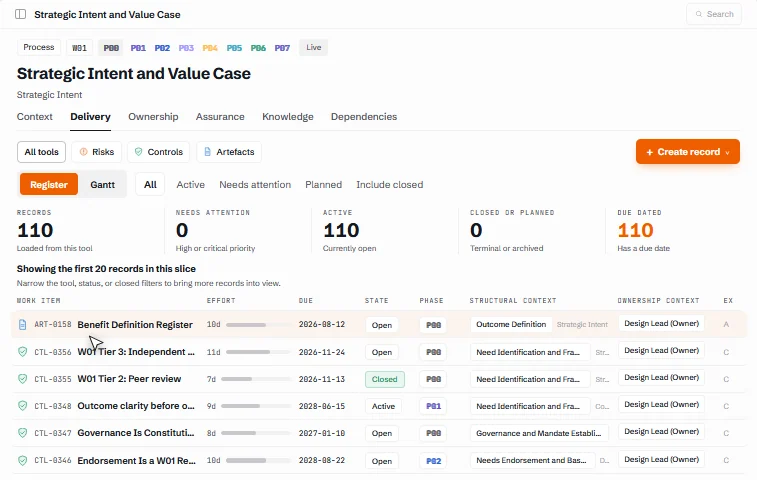
In Project:OS, each artefact template sets out what a deliverable must meet before anyone signs it off:
- A named owner, the resource inputs needed to produce it and its logic: what it depends on and what depends on it
- A quality criteria checklist, so each deliverable is reviewed against the same criteria
- A maturity state showing how firm each piece of information is, with an assumptions register behind it
- An approval pathway, so it is clear who signs it off
Questions
We already have our own procedures and QA system. Do we have to adopt yours?
No. We start by working out what you do today and what you should do, then make it repeatable using your process or a standard one. It can be deployed in Project:OS or in the systems you already use, with each step linked to the evidence it should produce.
Does Project:OS cover the statutory roles our people hold?
It maps 111 roles, linked to the work by 1,461 responsibility (RACI) links and to the law by 540 statutory-duty links. They include the Principal Designer, designers, design leads and managers, cost managers and fire engineers, as well as the client roles you work for, across 79 contract forms including the full NEC4 family.
Will it check our deliverables for us?
No. The template sets the criteria; your people do the review and make the call. Each deliverable is reviewed against the same criteria by the person responsible for it, and the evidence of that review stays on the record.
Our design, cost and programme data sit in different systems. Do we have to move them?
No. We work with the systems you already run, and connect only what a given question needs.
Talk to us about your process
Or the process or deliverable behind it, if that is where the trouble is.
Start a conversation